Short answer: A combi heats water on demand with no cylinder, so it suits most flats and smaller homes with one bathroom. A system boiler heats a stored cylinder of hot water, so it suits larger homes where two showers run at once. In London the deciding points are cupboard space, how many bathrooms you use together, and the mains water flow.
When a boiler is replaced, the biggest decision is often the type. In north and east London the housing varies a lot within a few streets. A studio flat in Bow, a split Victorian terrace in Stoke Newington and a 1930s semi in Southgate need different things. This guide explains the two main options and how they fit local homes.
The two types in plain terms
Combi boiler. Short for combination boiler. It heats your radiators and heats tap water straight from the mains when you open a hot tap. There is no hot water tank and usually no tank in the loft.
System boiler. It heats your radiators and also heats a hot water cylinder, a tank that stores hot water ready to use. Modern system boilers usually pair with an unvented cylinder, which runs at mains pressure. There is no cold water tank in the loft.
There is a third type, a regular or heat only boiler, that works with a cold water tank in the loft and a hot water cylinder. Many older London houses still have one.
How they compare
| Point | Combi | System |
|---|---|---|
| Hot water storage | None, heated on demand | Stored in a cylinder |
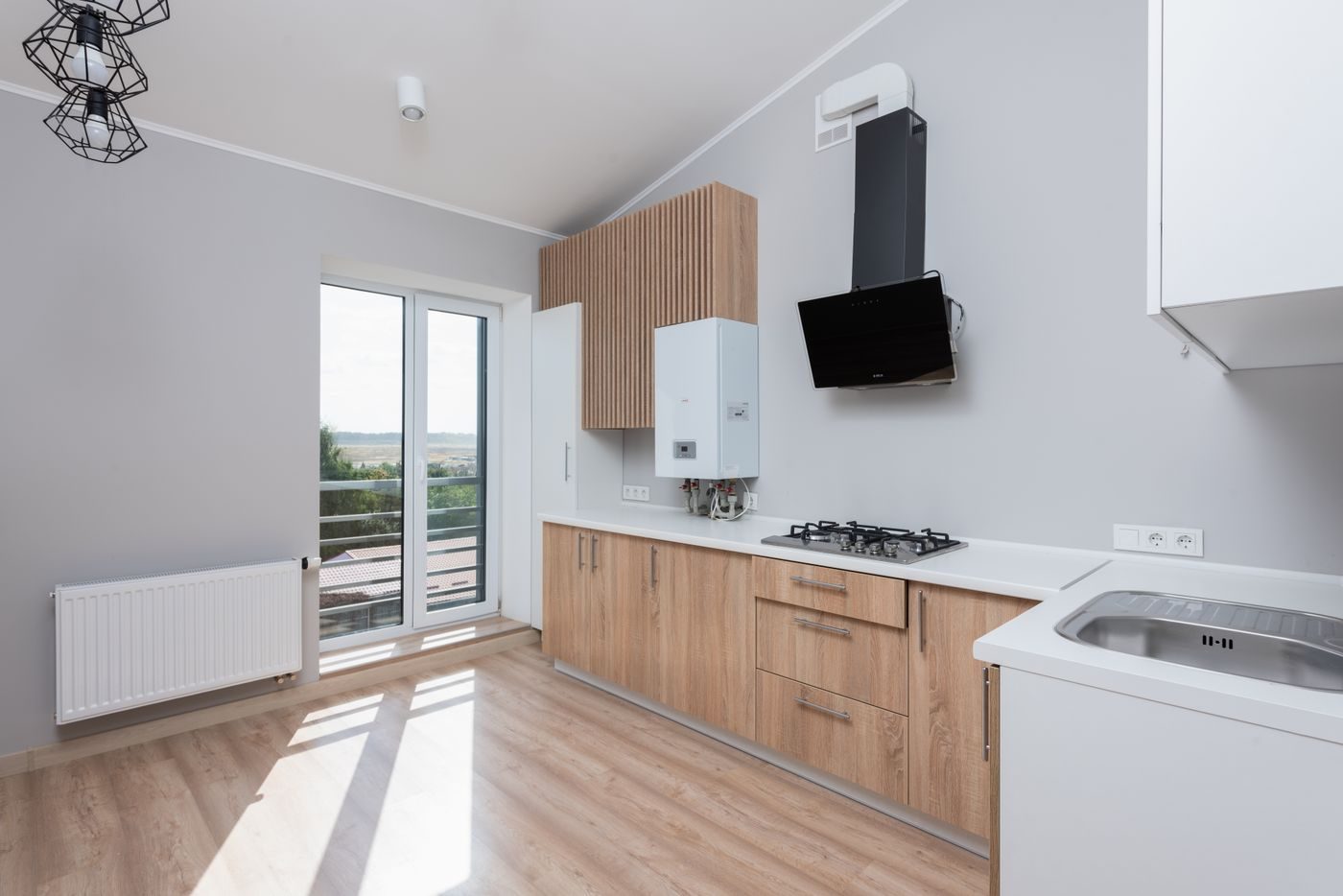
| Space needed | Boiler only, fits a kitchen cupboard | Boiler plus a cylinder cupboard |
| Two showers at once | Can struggle | Usually fine with the right cylinder |
| Hot water if boiler breaks | None | Some cylinders have an electric immersion backup |
| Depends on mains flow | Yes, strongly | Yes for an unvented cylinder |
| Scale risk in hard water | Plate heat exchanger in the boiler | Cylinder coil and immersion heater |
Flats: usually a combi
Most flats in Hackney, Islington and Tower Hamlets have little cupboard space and one bathroom. A combi suits them. In Tower Hamlets, 81% of households live in purpose built flats, so combis are by far the most common boiler there.
The main limits are water flow and the flue. A combi can only deliver as much hot water as the mains flow allows. Upper floor flats sometimes have weak flow. The flue also has to reach an outside wall or the roof, and in flats it may need to run through a ceiling void, which then needs inspection hatches. Our guide on boiler flue rules for flats covers this.
Enfield, Barnet and Redbridge houses: often a system boiler
Owner occupation is much higher in outer north and east London. The Census 2021 shows 52.4% of Enfield households own their home, and Barnet and Redbridge are similar. Many of these are interwar semis and terraces in Southgate, Palmers Green and Winchmore Hill, with an airing cupboard already in place and often a second bathroom or an en suite added later.
If two showers run at the same time in the morning, a system boiler with a cylinder usually gives the steadier result. Where there is already a cylinder cupboard, keeping a cylinder is often simpler than removing it. See our Enfield area page for more on local homes.
Victorian terraces: it depends
A whole Victorian terrace with one bathroom and good mains flow can run well on a combi. A large terrace with a loft conversion bathroom at the top may do better with a system boiler. If the house is split into flats, each flat normally has its own boiler, and combis are the usual choice.
Hard water changes the details, not the decision
North and east London water is hard. Thames Water’s 2025 reports show averages of 266 mg/l for Enfield Town, 274 mg/l for Enfield South and 268 mg/l for Hackney West. In a combi, scale builds in the plate heat exchanger that heats tap water. In a system, it builds on the cylinder’s heating coil and immersion heater. Guidance under BS 7593 says scale protection should be fitted where hardness is 200 ppm or more, whichever type you choose. Our guide on hard water and your boiler has the zone figures.
The rules for new boilers in England
The Boiler Plus standards have applied in England since April 2018. A new gas boiler must have a timer and room thermostat. A new combi must also have one extra energy saving measure: flue gas heat recovery, weather compensation, load compensation, or smart controls with automation and optimisation.
The installer must also notify the local authority within 30 days. You then receive a Building Regulations Compliance Certificate from Gas Safe Register. Since 2022, Approved Document J also requires a carbon monoxide alarm where a new or replacement fixed gas appliance is fitted.
What a survey looks at
Before any quote, a survey should check:
- how many bathrooms and showers you have and how you use them
- mains water flow and pressure at the kitchen tap
- where the flue can go and the condensate can drain
- whether the gas pipe is big enough for the new boiler
- the state of the radiators and system water
A boiler installation is then priced on survey. Gas work in the UK must be done by a Gas Safe registered engineer, so ask to see the ID card and check it on the Gas Safe Register. Our guide on what decides the cost of a new boiler explains the main price factors.
Quick questions
Is a combi boiler good for a house with two bathrooms?
It can be, if the mains flow is strong and you rarely run two showers together. If two showers often run at once, a system boiler with a cylinder usually copes better.
Do I need a cylinder with a system boiler?
Yes. A system boiler heats a hot water cylinder, which stores the water until you use it. You need a cupboard big enough for the cylinder.
Does a new combi need extra controls?
In England, the Boiler Plus rules from April 2018 mean a new gas combi needs one extra energy saving measure, such as weather compensation or smart controls with automation and optimisation.
Last updated 23 October 2026. Written for homes in London. Rules can change, so check the linked sources for the latest position.